2026年1月17日「モバイル英語学習」第903号(英語ストーリ): UBAZAKURA by Lafcadio Hearn

Notes:
province 地方、州(ここでは日本の旧国名「伊予国」を指す);
affliction 苦悩、心痛、災難;
divinity 神、神性;
deficient 不足している、不十分な;
fervently 熱烈に、ひたむきに;
summoned 呼び出された、召集された;
besought 懇願した、嘆願した(beseechの過去形);
commemoration 記念、追悼;
flourished 繁茂した、よく育った、栄えた;
bedewed 露で濡れた、しずくを帯びた;
**********************************
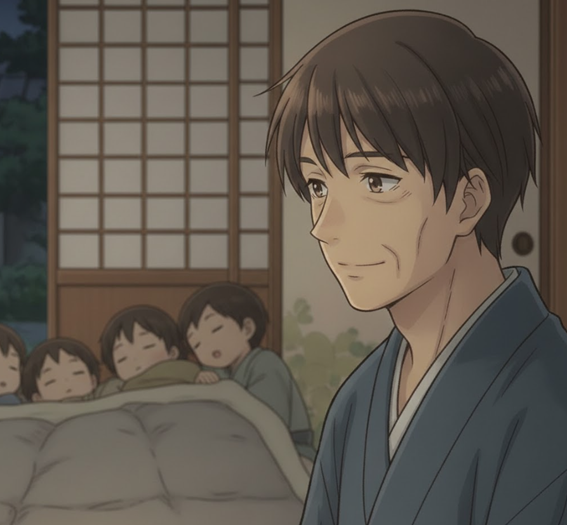
Three hundred years ago, in the village called Asamimura, in the district called Onsengōri, in the province of Iyō, there lived a good man named Tokubei. This Tokubei was the richest person in the district, and the muraosa, or headman, of the village. In most matters he was fortunate; but he reached the age of forty without knowing the happiness of becoming a father. Therefore he and his wife, in the affliction of their childlessness, addressed many prayers to the divinity Fudō Myō Ō, who had a famous temple, called Saihōji, in Asamimura.

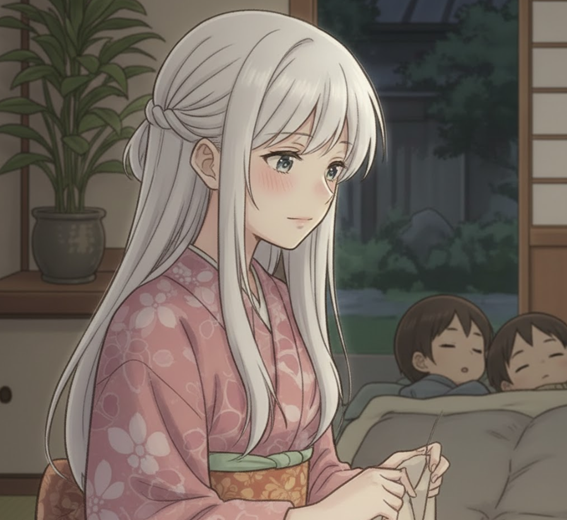
At last their prayers were heard: the wife of Tokubei gave birth to a daughter. The child was very pretty; and she received the name of Tsuyu. As the mother’s milk was deficient, a milk-nurse, called O-Sodé, was hired for the little one.

O-Tsuyu grew up to be a very beautiful girl; but at the age of fifteen she fell sick, and the doctors thought that she was going to die. In that time the nurse O-Sodé, who loved O-Tsuyu with a real mother’s love, went to the temple Saihōji, and fervently prayed to Fudō-Sama on behalf of the girl. Every day, for twenty-one days, she went to the temple and prayed; and at the end of that time, O-Tsuyu suddenly and completely recovered.
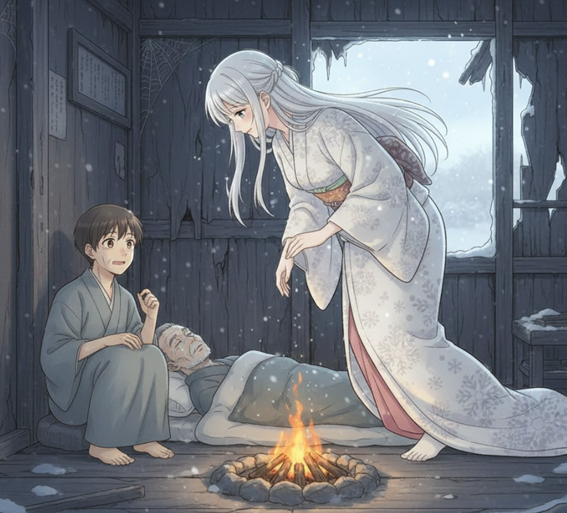
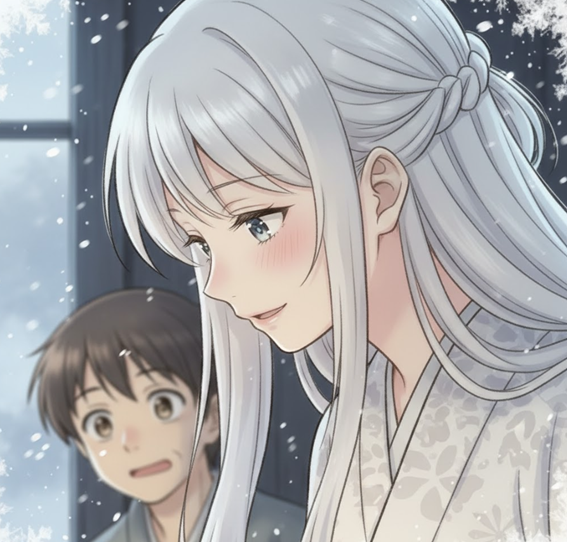
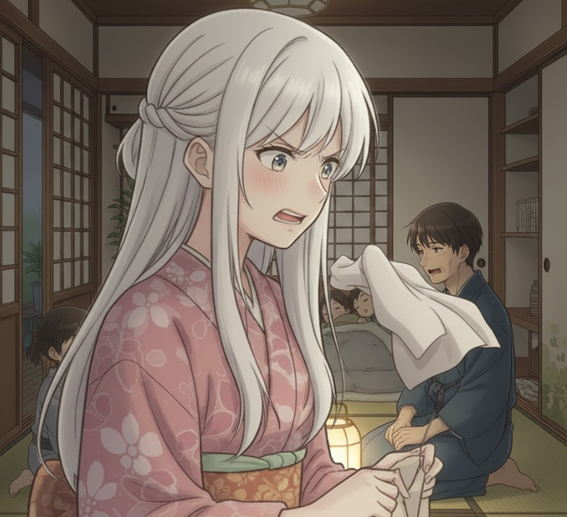
Then there was great rejoicing in the house of Tokubei; and he gave a feast to all his friends in celebration of the happy event. But on the night of the feast the nurse O-Sodé was suddenly taken ill; and on the following morning, the doctor, who had been summoned to attend her, announced that she was dying.

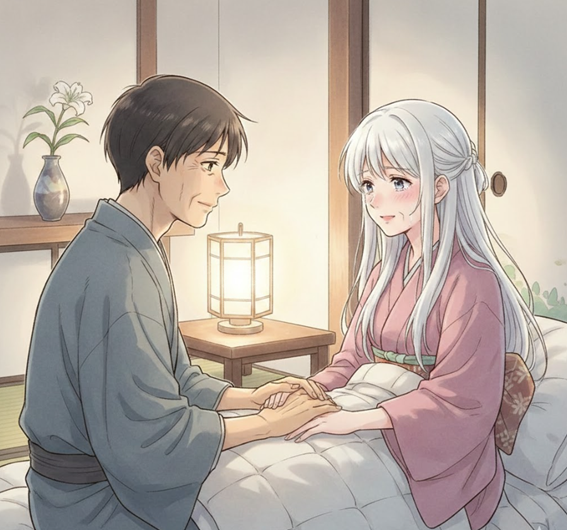
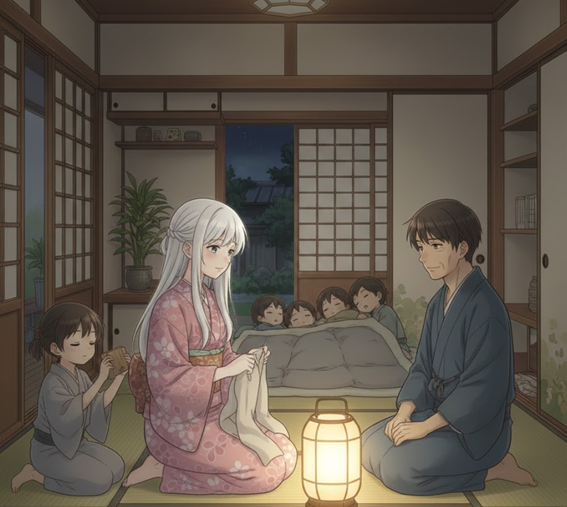
Then the family, in great sorrow, gathered about her bed, to bid her farewell. But she said to them:—

“It is time that I should tell you something which you do not know. My prayer has been heard. I besought Fudō-Sama that I might be permitted to die in the place of O-Tsuyu; and this great favor has been granted me. Therefore you must not grieve about my death… But I have one request to make. I promised Fudō-Sama that I would have a cherry-tree planted in the garden of Saihōji, for a thank-offering and a commemoration. Now I shall not be able myself to plant the tree there: so I must beg that you will fulfill that vow for me… Good-bye, dear friends; and remember that I was happy to die for O-Tsuyu’s sake.”

After the funeral of O-Sodé, a young cherry-tree,—the finest that could be found,—was planted in the garden of Saihōji by the parents of O-Tsuyu. The tree grew and flourished; and on the sixteenth day of the second month of the following year,—the anniversary of O-Sodé’s death,—it blossomed in a wonderful way. So it continued to blossom for two hundred and fifty-four years,—always upon the sixteenth day of the second month;—and its flowers, pink and white, were like the nipples of a woman’s breasts, bedewed with milk. And the people called it Ubazakura, the Cherry-tree of the Milk-Nurse.
**********************************

📖 全文の日本語訳 / Full Japanese Translation

乳母桜(うばざくら)

今から三百年ほど前、伊予の国温泉郡朝美村に、徳兵衛という善良な男が住んでいた。徳兵衛は郡内一の長者で、村長でもあった。たいていのことには恵まれていたが、ただ一つ、四十になっても子どもがなかった。

そのため夫婦は、朝美村の西法寺にある不動明王に、幾度となく祈願をかけた。

やがてその祈りが聞き届けられ、徳兵衛の妻は女の子を産んだ。子はたいそう可愛らしく、名を「露(つゆ)」といった。だが母の乳の出が悪かったので、「お袖」という乳母を雇った。

露は成長して、並ぶ者のないほど美しい娘となった。ところが十五の春、重い病に倒れ、医者たちはもはや助からぬものと思った。

その折、露を実の子のように可愛がっていた乳母のお袖は、西法寺へ赴き、不動さまにひたすら祈った。二十一日ものあいだ、毎日欠かさず寺へ通い、露の命を救ってくださるよう願い続けたのである。

そして満願の日、露はにわかに病が去り、すっかり元気を取り戻した。

徳兵衛の家では喜びに満ち、快気祝いとして友人たちを招き、盛大な宴が開かれた。ところがその夜、乳母のお袖が急に床についた。翌朝呼ばれた医者は、もう長くはないと告げた。

家族は深い悲しみに沈みながら、枕元に集まり別れを告げようとした。するとお袖は静かに言った。

「皆さまに、今こそお話ししておかねばならぬことがございます。私の願いは聞き届けられました。露さまの代わりに、私の命をお取りくださいと不動さまにお願いしたのです。そしてその願いは叶えられました。ですから、どうか私の死を嘆かないでください……。

ただ一つお願いがございます。私は感謝のしるしとして、西法寺の庭に桜の木を一本植えると、不動さまにお約束いたしました。けれど私はもう、自分の手でそれを果たすことができません。どうか私に代わって、その誓いを果たしてください……。

さようなら、皆さま。露さまのために死ねることを、私は幸せに思っております。」

お袖の葬儀が済むと、露の両親は、探し得るかぎり最も見事な若木の桜を一本、西法寺の庭に植えた。

桜はよく育ち、翌年の二月十六日――お袖の命日に――不思議なほど見事に花を咲かせた。そしてそれから二百五十四年ものあいだ、その桜は毎年きまって二月十六日に花を開いたのである。

花は白と桃色で、まるで女の乳房の乳首のように見え、露を含んで乳の滴るさまにも思われた。

人々はその桜を「乳母桜」と呼んだ。

2026年1月10日「モバイル英語学習」第902号(英語ストーリ): OSHIDORI by Lafcadio Hearn

📝 Notes

falconer: 鷹を使って鳥獣を狩る人
perceived: 見て取った
rushes: 湿地や水辺に生えるイネ科などの草
dreary: 恐ろしい, 陰気(いんき)な
marrow: 骨髄(こつずい)
piteously: 哀れに, 痛ましく
vivid: 鮮明(せんめい)な。生々(なまなま)しい
resolved: 決意した


There was a falconer and hunter, named Sonjō, who lived in the district called Tamura-no-Gō, of the province of Mutsu. One day he went out hunting, and could not find any game. But on his way home, at a place called Akanuma, he perceived a pair of oshidori (mandarin-ducks), swimming together in a river that he was about to cross. To kill oshidori is not good; but Sonjō happened to be very hungry, and he shot at the pair. His arrow pierced the male: the female escaped into the rushes of the further shore, and disappeared. Sonjō took the dead bird home, and cooked it.

Sonjo Hunting

That night he dreamed a dreary dream. It seemed to him that a beautiful woman came into his room, and stood by his pillow, and began to weep. So bitterly did she weep that Sonjō felt as if his heart were being torn out while he listened. And the woman cried to him: “Why,—oh! why did you kill him?—of what wrong was he guilty?… At Akanuma we were so happy together,—and you killed him!… What harm did he ever do you? Do you even know what you have done?—oh! do you know what a cruel, what a wicked thing you have done?… Me too you have killed,—for I will not live without my husband!… Only to tell you this I came.”…

Dream Woman

Then again she wept aloud,—so bitterly that the voice of her crying pierced into the marrow of the listener’s bones;—and she sobbed out the words of this poem:—

Hi kururéba
Sasoëshi mono wo—
Akanuma no
Makomo no kuré no
Hitori-né zo uki!

[“At the coming of twilight I invited him to return with me—! Now to sleep alone in the shadow of the rushes of Akanuma—ah! what misery unspeakable!”]

And after having uttered these verses she exclaimed:—“Ah, you do not know—you cannot know what you have done! But to-morrow, when you go to Akanuma, you will see,—you will see…” So saying, and weeping very piteously, she went away.

Weeping Woman

When Sonjō awoke in the morning, this dream remained so vivid in his mind that he was greatly troubled. He remembered the words:—“But to-morrow, when you go to Akanuma, you will see,—you will see.” And he resolved to go there at once, that he might learn whether his dream was anything more than a dream.

Sonjo Waking

So he went to Akanuma; and there, when he came to the river-bank, he saw the female oshidori swimming alone. In the same moment the bird perceived Sonjō; but, instead of trying to escape, she swam straight towards him, looking at him the while in a strange fixed way. Then, with her beak, she suddenly tore open her own body, and died before the hunter’s eyes…

Suicide

Sonjō shaved his head, and became a priest.

Priest

📖 全文の日本語訳 / Full Japanese Translation